Back to blogs
03
Designing for Websites
Over the past few days, I had the chance to work on the website revamp for Port - a product focused on safer, numberless communication.
While designing it, I realized just how much thought and balance goes into creating a good website.
It’s not just about visuals or flashy animations.
It’s about telling the right story, setting the right tone, and making sure your audience feels the value you offer — fast.
This post is a summary of that experience.
I’ll walk you through some of the key principles I leaned on while designing Port’s website — and that I believe apply to almost any website project, no matter the size or industry.
What Really Matters in a Website?

At the heart of any good website is clarity.
You have just a few seconds to tell visitors:
Who you are
What you offer
Why they should care
Aesthetics are important — they set the tone and build trust. But beautiful visuals mean nothing if the message isn’t clear.
Good design and strong storytelling have to go hand in hand.
The trick is:
Make it visually inviting
Remove any confusion
Help people quickly feel and understand the value you bring
Decision-Making Depends on the Type of Company
Not every website should follow the same formula. The kind of business you are heavily shapes design decisions:

For Product Companies
If you’re selling a product, highlighting the problem or making the audience feel the problem is key.
You want visitors to immediately relate — to think, “Yes, this is exactly what I need.”
Good examples of this are The Browser Company, Linear, and Superhuman.
The Browser Company doesn’t just list features — they help you feel how outdated today’s browsers are, and why their new vision matters.
Linear keeps the message razor-sharp for developers — they show how workflow should feel fast, organized, and modern without any clutter.
Superhuman focuses on emotional value — they frame email as something slow and painful elsewhere, and offer you the gift of speed and ease.
Each of these companies focuses first on making you feel the problem,
and then introduces their product as the perfect solution — which is exactly what strong product websites should do.
For Service Companies
If you’re offering a service, it’s all about building trust and getting people to try you quickly. Allowing users to experience a part of the service right away can make all the difference.
Good examples of this are Quicklend, Cloaked and Bindbee.
Quicklend shows how simple it is to get started without making users jump through hoops.
Cloaked is another great example — it builds trust immediately around privacy, keeps the experience lightweight, and invites users to try the product quickly without friction.
Bindbee speaks directly to developers and startups — making it extremely easy to understand what they offer, and encouraging fast action with simple onboarding.
All three examples focus on clear messaging, immediate value, and removing friction, which is key for service businesses.
For Enterprise Companies
If you’re serving enterprises, your website needs to show scale, reliability, and trustworthiness.
The tone is often more confident, measured, and solid. Flashy design isn’t needed — credibility is. Think clear structure, proof points, and a tone of calm authority.
Good examples of this are Snowflake, Intuit, and Atlassian.
Snowflake focuses on clear benefits, customer success stories, and a strong technical foundation.
Intuit handles multiple audiences beautifully — personal finance users, small businesses, and enterprises — with polished, confident design.
Atlassian showcases how a broad ecosystem of products can still feel clean, trustworthy, and easy to navigate, with clear messaging built for scale.
Each site reflects clarity, maturity, and proof of scale — exactly what enterprise buyers need to feel confident.
In short:
The story you tell changes based on who you are.
The Foundation Matters: Brand Identity and Design Systems
Even with all these crucial factors — audience, problem, clarity — there’s something else that makes a huge difference before you even start designing:
Having a strong brand identity and design system.
A good brand identity gives your website structure, consistency, and maturity.
It becomes easier to combine different layouts, styles, and colors without making the site feel messy or disconnected.
It allows your design choices to feel intentional — not random.When you have a flexible design system in place, you can focus more on what you’re communicating rather than worrying about how it looks every time
The end result is a website that feels polished, confident, and trustworthy — while still making space for creativity and storytelling.
Good Websites Are a Team Effort
Another important piece: getting the right people involved early.
Achieving a great balance on a website is not just a designer’s job.
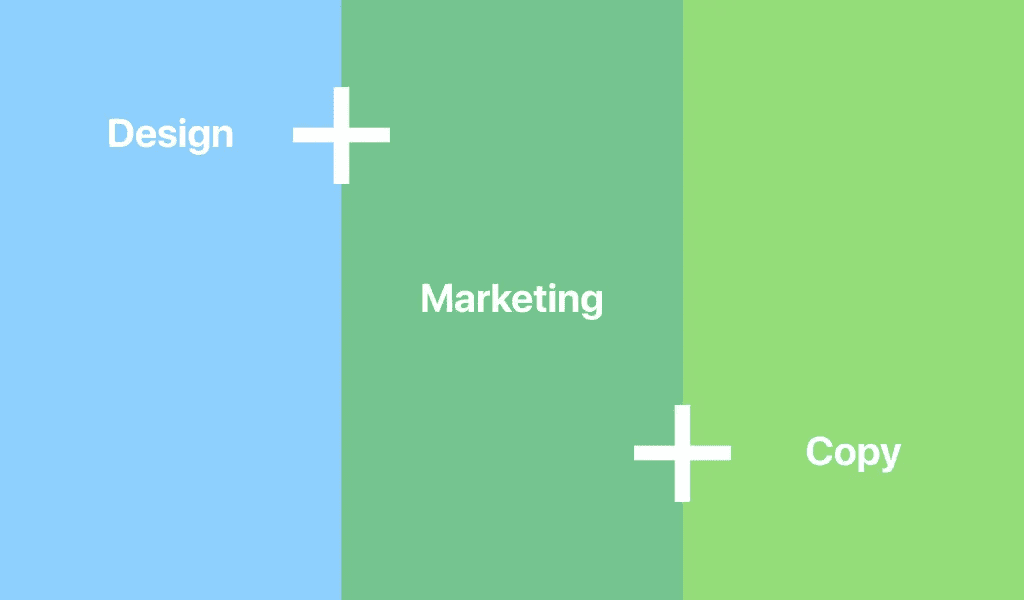
Design + Marketing + Copy should work together closely — from the start — to craft a website that looks good, sounds right, and truly connects with the audience.
When these teams collaborate from day one, you avoid the common problems of “good visuals but confusing messaging” or “great copy but boring design.”
It all ties back to clarity and feeling — and it takes teamwork to get there.
How We Approach Website Design
Here’s a simple way to think about designing any website:
1. Understand the Audience
Who are you talking to?
What do they care about?
How familiar are they with your space?
Are they quick decision-makers or careful researchers?
The better you know them, the sharper your message and design can be.
2. Identify the Problem You’re Solving
At the end of the day, your website is answering one big question for your audience:
“Can you help me?”
If you can clearly show the problem you solve (and how you solve it better than others), you’re already halfway there.
Everything else — the images, the layout, the words — supports this.
Final Thoughts
Websites aren’t just digital brochures.
They are an extension of your business.
Your website should feel like a natural part of your brand — reflecting the same tone, the same care, and the same value you offer in the real world.
When you get that right — when the design and the messaging align — you don’t just make a good impression.
You build real connection.